
Trace Former Southampton County Owners
Every chain of title runs backward from a known parcel. It pairs each grantee with the grantor who sold to him. Southampton County record books date to the county's 1749 formation. The modern COVERS index, however, publishes no clear statement of its earliest searchable year. For older material, three routes stand open. These are the clerk's historical books, Library of Virginia microfilm, and the Brantley courthouse-book project. Pick the source that matches your period. And keep an instrument-level log instead of linking people by surname alone.
| Source | Years It Covers | Where Held | What It Shows |
|---|---|---|---|
| COVERS land index | Online cutoff not verified | Virginia remote portal / Clerk terminal | Recorded party and instrument trail |
| Southampton deed and court books | County formed 1749; series vary | Clerk and Library of Virginia | Earlier transfers and court context |
| Brantley courthouse-book project | Early books through late 1880s | Virginia Genealogical Society project | Images and indexes of books, not all loose papers |
| LVA microfilm and catalogs | Record-group dates vary | Library of Virginia / interlibrary loan | Reel inventories, wills, deeds, and court series |
Open COVERS first and pull the most recent recorded conveyance. Its legal description points you to the earlier book or series. The Brantley index then helps locate entries from the earliest decades. LVA's catalog guides the reel choice and flags reels that no longer exist. A historic plat or tax entry adds useful context. The conveyance itself still anchors the chain.
Southampton County COVERS Time Range
The remote COVERS portal is the modern route into Southampton County deed records. But it states no oldest searchable year, result limit, image price, or exact field labels. So do not assume it begins in any particular year. The clerk can confirm the live cutoff. The clerk can also say whether viewing an image requires a terminal or a paid account. If the online range stops short of the deed you need, fall back on the clerk's historical books. You can also fall back on the Library of Virginia catalog. The web limit is just a limit. It is not a break in title. The physical record base reaches back to 1749. Southampton County was formed from Isle of Wight that year. Treat that as a historical starting point only. No one claims every 1749 book survives complete or sits online.
Brantley Index for Southampton County Books
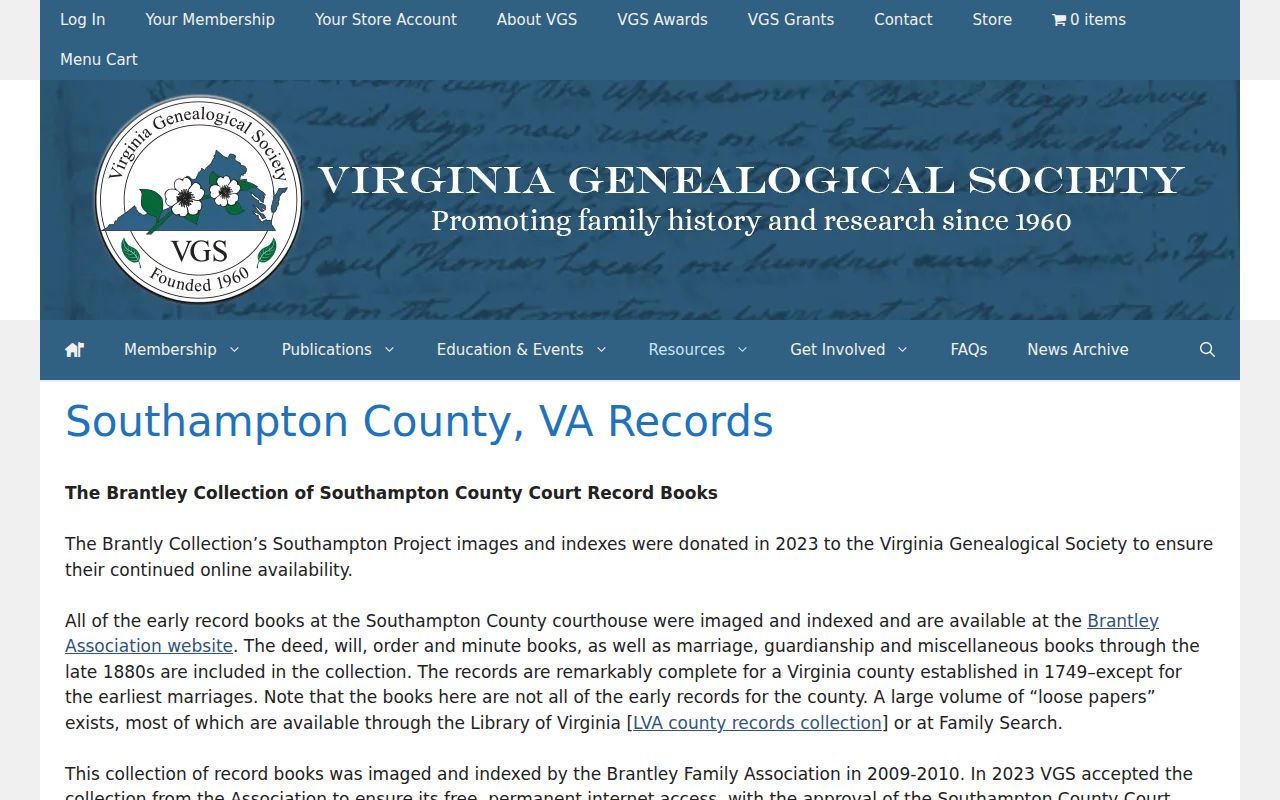
The Virginia Genealogical Society describes a project that imaged and indexed Southampton County's early deed, will, order, minute, marriage, guardianship, and miscellaneous books. The coverage runs through the late 1880s. When the modern web portal runs dry, this index can still pin a name to a book entry. One caution from the project itself: the volumes are books, not loose papers. Use it as a finding aid. Then cite the underlying image and record reference. The Brantley courthouse-book project page describes the early book coverage.
An indexed name only points you to a volume. Read the image itself, match its tract calls, and only then extend the chain to an earlier owner.
Southampton County Missing Reel Clues
The Library of Virginia microfilm catalog notes that reels 73 through 82 no longer exist. Reels 285 through 326 are missing as well. That is a concrete gap in one repository's series. It does not prove a deed went unrecorded or that no other copy survives. Ask the clerk whether the originals remain on file. Check LVA's related volumes and loose papers. See whether the Brantley index or another repository holds a duplicate. The Southampton microfilm finding aid lists categories and reel status.
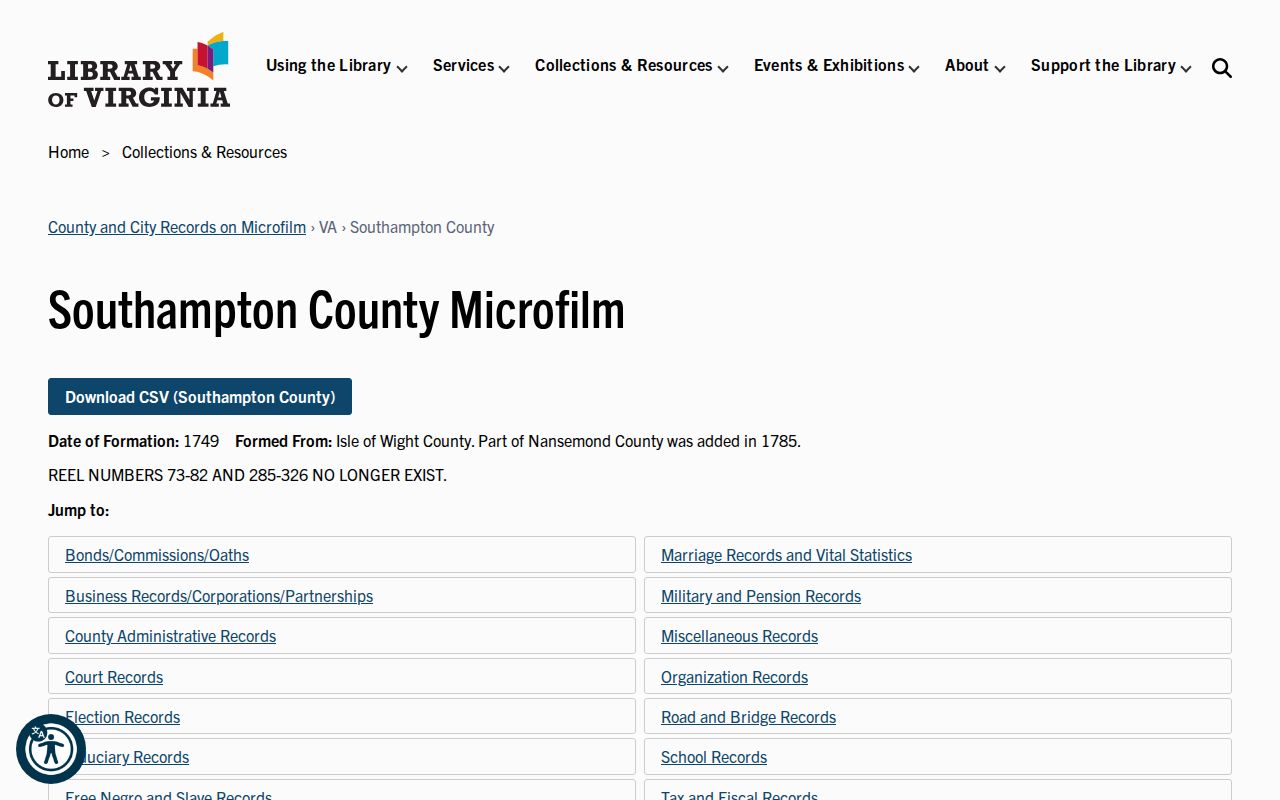
Note the reel number and its status in your log, so a later search can test a different source.
Southampton County Name and Parcel Variants
Older indexes play tricks. A surname may come first. Initials may replace given names. A married name may appear, or a place may carry an odd spelling. Search both parties to every deed. Keep each result's date, acreage, witnesses, and land calls. A common name alone never ties a person to a tract. Anchor the instrument to a creek, a road, an adjoining landowner, a survey, or a parent-tract description. Then step back to an earlier owner of record. Today's parcel may stitch together several old tracts or descend from a partial conveyance. Acreage may shift. A plat may be referenced. A deed may say it conveys only part of a larger estate, so record a branch instead of forcing a straight chain. For every step, log the sequence, parties, document type, execution and recording dates, book and page, instrument number, consideration if stated, acreage, legal description, source, image status, and your confidence in the link.
Walk Back Through Southampton County Deeds
Pull the latest deed first. Identify the grantee who received the Southampton County land. Then read the grantor who conveyed it. Search that grantee in an earlier period to find the prior acquisition. Repeat with each prior grantor as an earlier grantee. Expect complications. The parcel may have been split, recombined, or described as part of a parent tract. At every link, compare acreage, creek and road calls, adjoining owners, survey references, and lot or block data.
- Record the current grantee's deed, execution date, recording date, book/page or instrument number.
- Copy the prior grantor and full legal description from the instrument.
- Search that party as an earlier grantee, trying name variants and both index roles.
- Match acreage, tract calls, and referenced plats before linking the next deed.
- When the portal stops, ask the Clerk or LVA which book, reel, or loose-paper series covers the date.
- Grantor
- The party that transferred an interest in the instrument.
- Grantee
- The party that received the interest.
- Chain of title
- The connected instruments that trace an interest through time.
- Legal description
- The written land reference; older deeds may not use today's street address.
Jerusalem and Courtland in Older Deeds
Courtland was once the village of Jerusalem. Its charter traces establishment to 1791. It also records the 1888 incorporation and the name change. So a former-owner search that starts from a modern Courtland address may need Jerusalem. That name can appear in earlier deed records and newspaper references. Confirm the location through courthouse, road, river, and tract descriptions. Never assume every old Jerusalem reference matches the modern town boundary. The Courtland Historic District and the railroad-era lot growth supply useful historic geography. They can guide deed research in Southampton County. They still cannot replace a plat. Keep the historic place name alive as a search variant. Then tie it to the actual recorded land description.
Probate Can Branch a Southampton Chain
Probate often splits a tidy Southampton County chain. A death interrupts the usual buyer-to-seller sequence, and the fix lives in two record sets at once. Search the probate file and the land records together. The instrument that moves the property may be an executor's deed, an administrator's deed, a deed of distribution, or an heirs' conveyance. A death certificate locates an estate. It is not a land transfer. When the tax roll still lists a decedent, confirm what probate authority acted and which later deed was recorded.
Older estates call for archive work. The Library of Virginia catalogs wills, bonds, guardianship records, court books, and loose papers, and Brantley indexes the early deed books. Marriage registers can explain a family name change. Use them as context, since the recorded conveyance remains the title link, and the archives' Southampton marriage-register catalog describes an early county collection that may help separate family names across a long ownership chain.
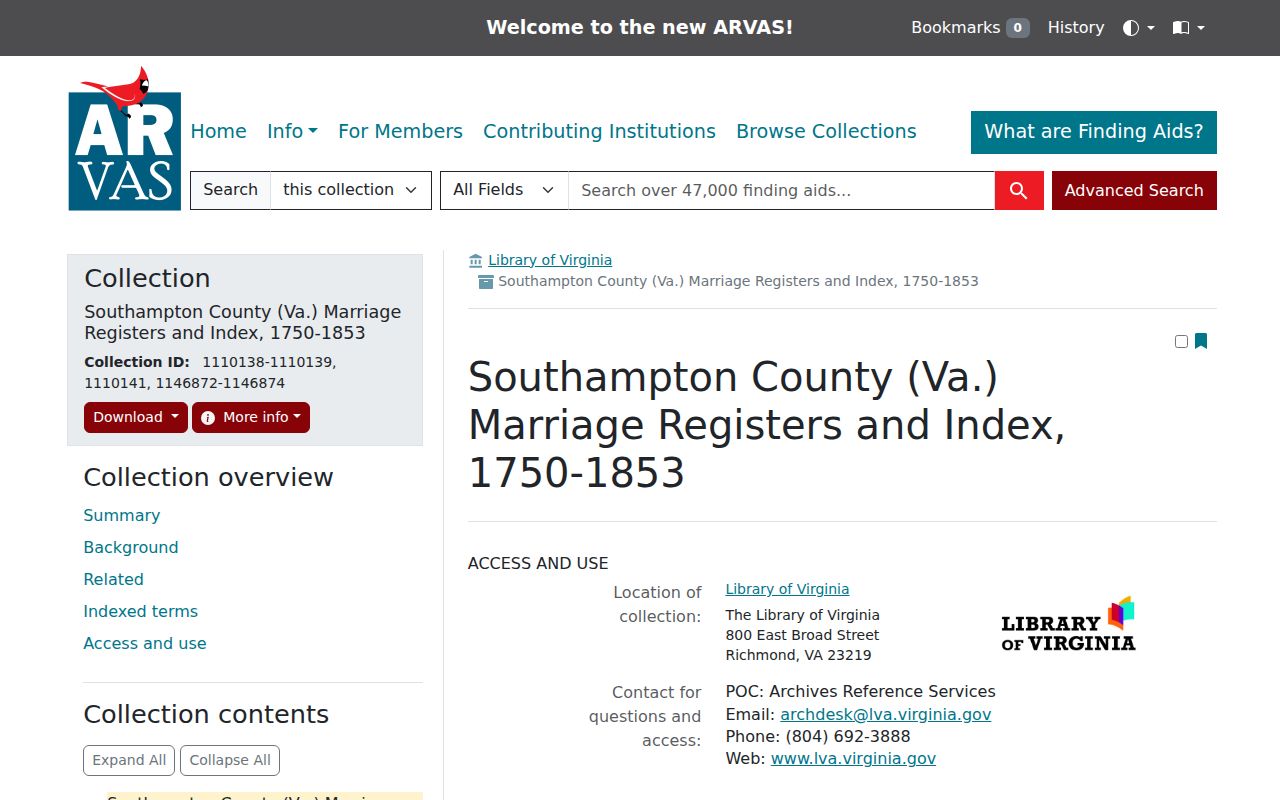
A marriage entry is context, not title. Only the Circuit Court deed or probate record establishes that Southampton County land changed hands.
Ask the Southampton Clerk for Earlier Books
The Southampton County Circuit Court Clerk keeps deed and plat volumes at 22350 Main Street, Courtland, VA 23837, with mail going to P.O. Box 190. The published phone number is 757-653-2200, the fax is 757-653-2547, and the counter serves visitors from 8:00 a.m. to 4:30 p.m. Call ahead. Ask whether the public COVERS terminal is open that day, whether the deed books and plats you need are on site, and what plain or certified copies cost, since no posted fee schedule exists. A quick call saves a wasted trip to Courtland.
Older Southampton County property records sometimes sit with another public body instead. Virginia FOIA lets you send a request several ways, and the office owes you a reply within five working days. Describe the parcel, the parties, the type of record, and the years involved, and request a cost estimate before work begins. One limit matters here. A FOIA request can obtain an existing deed book or image, but it cannot make an office assemble a title history for you.
How Far Southampton County Ownership Goes
Southampton County's older land books reach back to 1749. Part of Nansemond County joined in 1785. Those dates describe the county's historic record base. They do not fix the starting year of the current COVERS remote index, whose online cutoff the clerk's office does not publish, so call the clerk for the live search range. For years beyond that point, lean on the physical books. The state archive and local indexes cover the rest.
Time-depth note. The COVERS cutoff year was not published in the sources inspected. Older material may be in deed books or archives, and former-owner research is for lawful property history, not for tracking or harassing anyone.